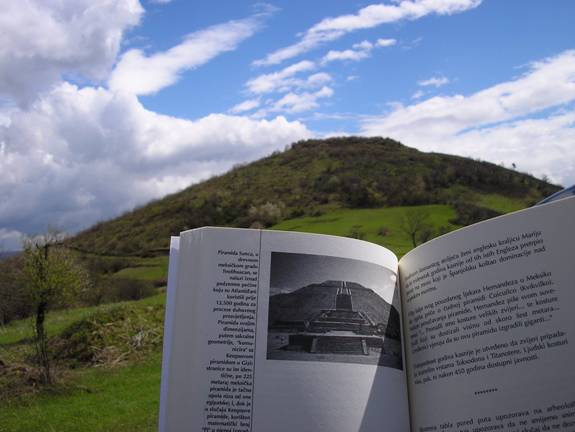
men jag har lite egna teorier , att det här är kanske Atlantis , kanske var det här området översvämmat eller hav, därför är det så mycket jord på pyramiderna , eftersom det sägs ju att Atlantis har sjunkit, så det här kanske kan vara atlantis, det är min teori
osmangich tror också att det var hav därDet låter väldigt intressant, kan du utveckla dina tankar? Har Osmanagic några liknande funderingar?
i bosniska berg har man hittat ringformad del av kedjor , och en teori är att det var för att man ska hålla båtar båtar , eftersom det var hav så
senaste nyheter som jag har läst ,finns det mycket kopplat astronomisk med de här pyramiderna, det är lite svårt att översätta
 plus att pyramiderna formar en rektangel med 60 grader vilket är helt otroligt tycker jag

har ingen bild på den minsta pyramiden
och igår hittade många stora sfäriska bollar som i Costa Rica och latin amerikanska länder
lite text om järn ringar
The foundation will also focus on supporting the exploration of iron rings and Bosnian stone balls
Local anecdotes
The area of BRCKO- MAJEVICA
‘One of my friends was a teacher in Brcko in the 70's. Her colleague, a geography professor, had an interest in strange phenomena and once told his colleagues about Black Caves on Majevica. He described a massive megalith with metal rings that he had found at the entrance to one of the caves. He believed that it remained from an age-old port, when the water still reached those heights. To prove his point, he took a group of teachers and students to the caves.
My friend, who now lives in Sarajevo, described what she saw during that visit:
“At the entrance to one of the caves stood a massive monolith with metal rings hanging on extensions that were inserted into the monolith, each ring was about 40 cm in diameter and attached in such a way that we were unable to take any out, not to move them.
We could not see how the metal extensions that held the rings were attached to the megalith. Nor could we ascertain how the rings had been attached to the holders as there were no signs of joints or welds on the rings, nor any other visible sign of the rings being joined - they made one compact circle without beginning or end.
The rings were coarse and they could not conclude if they had been made like that, or whether it some kind of ornament or even ideograms. The rings were covered in black corrosion but in places the shine of steel was visible and appeared to be a high quality steel alloy. There were several metal rings in the holders, although I am not sure how many.
On the megalith itself, below the line of rings, were deep horizontal grooves. We supposed the grooves were from the ropes that went around the monolith and were tied to the rings.
The walls of the cave were full of fossilised shells. The floor was also full of shells which were not attached to the stone and not fossilized. The biology professor, who was present, said that they were seashells and that such shells did not exist in the local Sava river. This tells us that there have been two aquatic periods, completely separated by large intervals of time.”
‘She also told me of a massive spine that her husband had found on the Sava riverbed, which he used as a chair. He is a veterinarian by profession and took it to his anatomy professor for examination but they could not establish what animal it came from and unfortunately, the spine went missing during the last war.
‘She was also present when they found gigantic rib cages, again in the river Sava, during low tide. As the ribs and the spine were not fossilized it seemed they were not very old, yet animals of such size and proportions do not exist in the river Sava today.’
Theories behind stone balls remain elusive
Explorer Semir Osmanagic has recently returned from a visit to Mexico, in the town of Gudalahare,
where he has been investigating the presence of stone balls, resembling those found across regions of
Bosnia.
He found hundreds of stone balls on the Cerra Piedras Bollas hill. There was only one reference to these stone balls,
reported in the National Geographic magazine in 1968. The archaologist who found and reported the stone balls could not
believe that primitive Indian hands could have created the objects, which were up to 4m diametre and weighed as much
as 50 tonnes. He visited a geologist in the region who told him the local theory that the balls were thrown by a
volcano, some 30km away, millions of years previously.
However, most of these balls are concentrated on one hill in the region, so discounting that theory, in addition to the
geometric shape of the balls. Another local belief, that there was gold at the centre of the balls, has resulted in
damage to many of the stone balls Osmanagic saw.
All these balls must be the product of intelligent human beings, yet historians have all but ignored their presence - these
objects have only, for example, received one small mention in National Geographic, several years before. Little
significance has been placed on their existence.
On examining one of the balls in the village of Ahualulco del Mercado, Osmanavic concluded that it was created by
the same methodology as that used to create stone balls in Costa Rica and Bosnia and using the same material. There is
nothing in our current understanding of history that explains the presence of these stone balls.
bosniska sten bollar

vs
costa rica sten bollar
mexiko och andra latin amerikanska länder har sten bollar
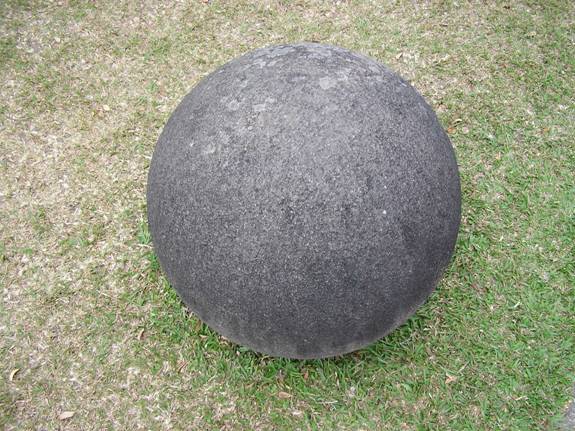
det finns mycket likheter mellan bosnien och latin amerikanska länder
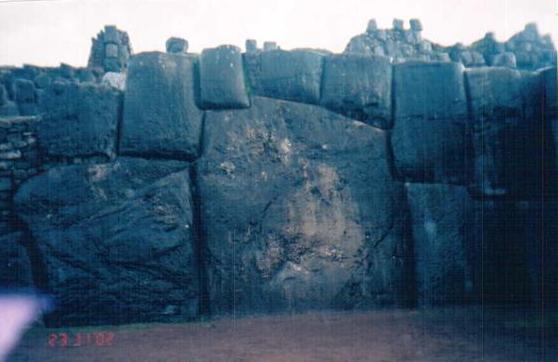
sten bollar, pyramider, byggnader
Bosnien Hercegovina
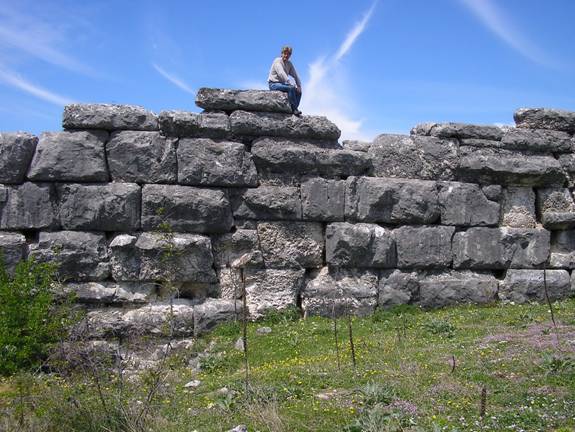
vs
Peru
Bosnien pyramid vs Mexico teotihucan Pyramid